
Hair Fall & Hair Loss Treatment in Ahmedabad, Gujarat
Find the cause first. Then choose the treatment.
Losing more hair than usual, or noticing thin patches? At ADORN, Ahmedabad, Dr Harsh Amin first finds what is causing your hair fall. He then plans the right non-surgical treatment for you, such as medicines, PRP, GFC, mesotherapy or scalp care. This is for both men and women.

Treatments
Medicines · PRP · GFC · Mesotherapy · QR678 · Scalp care
First step
Consultation, scalp examination, blood tests if needed
Anaesthesia
Numbing cream for injection treatments
Downtime
Usually none; normal routine the same day
Sessions
Planned as a course, then maintenance
Early change
Often seen in 3–6 months, varies by person
A closer look at hair fall, from the first strand on your pillow to a treatment plan
Most people notice hair fall slowly. More hair on the pillow, in the shower drain or on the comb. A wider parting. A thinner crown in photos. Then comes the question: is this normal, and can it be stopped?
Some hair fall is normal. Losing around 50 to 100 hairs a day can be part of the natural hair cycle when new hair grows back. Hair loss becomes a concern when shedding suddenly increases, continues for months, or leaves visible thinning, a receding hairline or patches.
Hair fall is not one disease. Hereditary thinning, stress, illness, thyroid problems, low iron, pregnancy and scalp conditions can all cause it, and each needs a different approach. This guide explains the common causes, how hair loss is diagnosed, the treatment options available at ADORN, what results are realistic and how to decide what suits you.
Understanding the basics
What causes hair fall and hair loss?
Hair grows in a cycle: a long growth phase (anagen), a short transition (catagen) and a resting phase (telogen) that ends in shedding. Hair loss happens when this cycle is disturbed — follicles shrink and produce thinner hair, too many hairs enter the resting phase at once, or follicles are damaged.
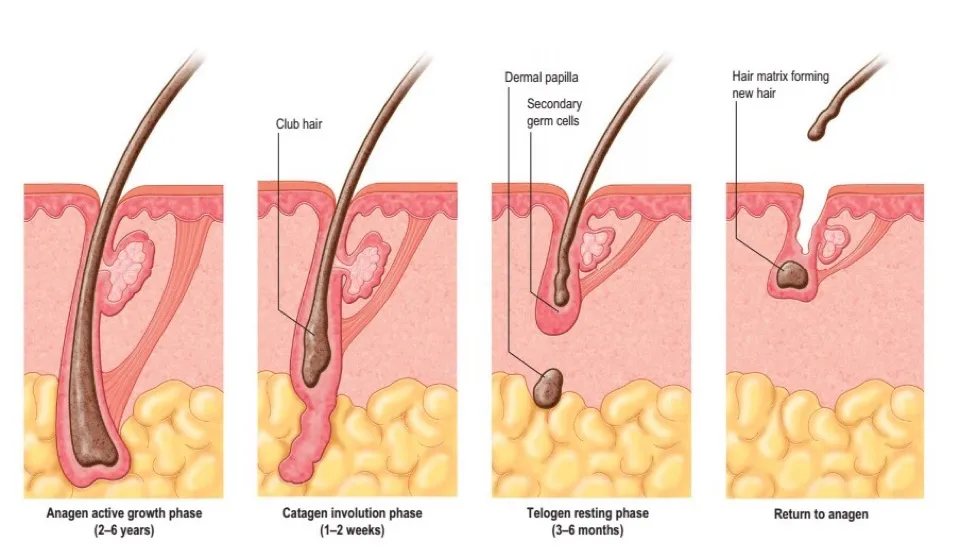
Common causes we see in Ahmedabad
- Hereditary pattern hair loss in men and women (androgenetic alopecia)
- Stress, poor sleep and major life changes
- Fever and illness such as dengue, typhoid or COVID-19
- Low iron, vitamin D, B12 or protein; crash dieting
- Thyroid disorders and hormonal changes, including PCOS
- Pregnancy and childbirth
- Scalp conditions such as dandruff, seborrhoeic dermatitis or psoriasis
- Some medicines
- Tight hairstyles, harsh chemical treatments and frequent heat styling
More than one cause is often involved, especially in women. That is why treatment starts with diagnosis, not a product.
Know your type
Types of hair loss we treat
Different types of hair loss look different and need different treatment. Find the one closest to yours.
Male pattern baldness
A receding hairline at the temples or thinning at the crown, often running in the family.
- Receding hairline
- Crown thinning
- Early baldness in the 20s
Female hair loss and thinning
A widening parting or overall thinning, often linked to hormones, iron, thyroid or pregnancy.
- Widening part
- Postpartum hair fall
- PCOS-related thinning
Sudden hair fall (telogen effluvium)
Heavy shedding that starts weeks or months after fever, illness, stress or a crash diet.
- Hair fall after dengue or typhoid
- Hair fall after weight loss
- Shedding after surgery or stress
Alopecia areata (patchy hair loss)
Round, smooth bald patches on the scalp, beard or eyebrows, caused by the immune system.
- Coin-sized bald patches
- Beard or eyebrow patches
- Recurring patches
Dandruff and scalp conditions
Flaking, itching, redness or greasy scales that can add to hair fall.
- Persistent dandruff
- Seborrhoeic dermatitis
- Scalp psoriasis
Is treatment right for you?
The first question is not which treatment — it is why your hair is falling
Two people with the same amount of hair fall can need completely different treatment. A diagnosis tells you whether your hair loss is temporary, hereditary or medical, and which options are likely to help.
What a specialist may assess
- 01
Your hair loss pattern
Is it spread across the scalp, at the hairline and crown, or in patches? Is it getting worse?
- 02
When it started and what changed
Fever, illness, surgery, pregnancy, stress, a new medicine or a sudden diet around the time it began.
- 03
Your scalp health
Dandruff, itching, redness, scaling or infection that needs treating first.
- 04
Your general health
Thyroid, iron, vitamin levels, hormones and other medical conditions.
- 05
Your expectations
What you hope to achieve, and whether that is realistic with non-surgical treatment.
Where needed, blood tests help find a medical cause.
When is non-surgical treatment not enough?
Medicines and injection treatments work on follicles that are still alive. Where hair has been permanently lost — a fully bald area or a long-standing receding hairline — they cannot regrow hair. A hair transplant may then be considered, often alongside treatment that protects the hair you still have.
Read about hair transplantWhere are you on the hair-loss scale?
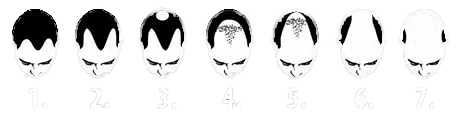
The important point: any treatment should follow an assessment, not replace one.
Book an assessmentTreatment options
Hair fall treatment options at ADORN
Treatment is usually a combination, not a single procedure. Your plan depends on the cause, the stage of hair loss and your medical history.
Medical treatment
Medicines prescribed after assessment
Prescription medicines can slow hereditary hair loss and support regrowth. Options may include topical or oral minoxidil, DHT blockers for suitable men, and hormonal treatment for selected women.
- Prescribed only after diagnosis
- Usually needs ongoing use
- Side effects discussed before starting
PRP hair treatment
Platelet-rich plasma
A small sample of your blood is processed to concentrate platelets, then injected into thinning areas of the scalp.
- Uses your own blood
- Planned as a course of sessions
- Often combined with medicines
GFC hair treatment
Growth factor concentrate
Like PRP, prepared from your own blood, with the preparation focused on growth factors.
- Prepared from your own blood
- Different preparation method from PRP
- Suitability assessed at consultation
Hair mesotherapy
Micro-injections into the scalp
A tailored solution of vitamins, peptides or medicines placed just under the scalp skin with fine needles.
- Superficial micro-injections
- Solution chosen for your scalp
- Course of sessions
QR678 hair treatment
Peptide-based formulation
A ready-made formulation of growth-factor peptides injected into the scalp in a course of sessions.
- Peptide-based formulation
- Injected into thinning areas
- Course of sessions
Scalp and supportive care
Treating what makes hair fall worse
Treatment of dandruff and scalp conditions, correction of deficiencies, and other options such as low-level laser therapy where suitable.
- Scalp condition treatment
- Nutrition and deficiency correction
- Home-care routine
Which treatment should you choose?
No single treatment suits everyone. The choice depends on the cause and stage of your hair loss, your general health, how much time you can give to sessions and your budget. A useful consultation should explain not only which treatment is suggested, but why it suits your type of hair loss.
Your treatment
What happens before and during hair fall treatment
Before: your plan starts with a diagnosis
- 1
Step 1: Discuss your hair loss history
When it started, how it has changed, family history, illnesses, diet, medicines and previous treatments.
- 2
Step 2: Examine your hair and scalp
The pattern of thinning, hair density, hair shaft quality and scalp condition are examined.
- 3
Step 3: Blood tests if needed
Tests for iron, thyroid, vitamin levels or hormones may be advised when a medical cause is suspected.
- 4
Step 4: Establish the diagnosis
The history, examination and test results together point to the type of hair loss.
- 5
Step 5: Plan your treatment
Medicines, in-clinic treatments, scalp care, or a combination — with the number of sessions, expected timeline and costs explained.
- 6
Step 6: Baseline photographs
Standardised photographs help you and your doctor track progress over the coming months.
Do not stop prescribed medication or start a new medicine or supplement without advice from your treating clinician.
During: a typical injection session (PRP, GFC, mesotherapy)
- 1
Step 1: Scalp cleaning
The scalp is cleaned and the treatment area marked.
- 2
Step 2: Numbing
A numbing cream is applied to reduce discomfort.
- 3
Step 3: Preparation
For PRP and GFC, a small blood sample is taken and processed. For mesotherapy or QR678, the solution is prepared.
- 4
Step 4: Injections
Fine needles place the solution into thinning areas of the scalp.
- 5
Step 5: Aftercare instructions
Guidance on washing, oiling, exercise and when to return for the next session.
Does hair fall treatment hurt?
Medicines are taken at home. For injection treatments, a numbing cream is used, so most people feel only mild pricking or pressure. The scalp may feel tender for a day. The level of discomfort varies — your treating team should explain what to expect and what to do if discomfort lasts.
Progress & timeline
Hair fall treatment timeline: what happens next?
Hair grows slowly, so results take months, not weeks. This is a general guide; your own timeline depends on the cause, the treatment and how your hair responds.
Think of the process as
- 01
Weeks 1–4
Medicines begin and sessions start. A short-term increase in shedding when starting minoxidil is often temporary.
- 02
Months 1–3
Daily hair fall often begins to reduce, especially when a cause such as low iron or illness has been treated.
- 03
Months 3–6
Fine new hairs and better thickness may become visible in thinning areas.
- 04
Months 6–12
Progress photographs are compared with your baseline, and the plan is adjusted if needed.
- 05
After 12 months
Hereditary hair loss usually needs ongoing treatment to keep the improvement. Temporary hair fall often does not.
The exact timeline varies between individuals.
Results
Hair fall treatment results: what is realistic?
Non-surgical treatment can reduce hair fall, thicken thinning hair and slow further loss. It cannot bring back hair where follicles have been permanently lost, and results are not the same for everyone.
Cause of hair loss
Temporary hair fall from illness or deficiency often recovers well once the cause is treated. Hereditary hair loss is managed, not cured.
Stage of hair loss
Treatment works best while follicles are still alive — thinning rather than fully bald areas.
Consistency
Medicines and sessions need to be continued as planned. Stopping often lets hereditary loss continue.
General health
Thyroid, iron, hormones and stress all affect how hair responds.
Combination treatment
Medicines combined with in-clinic treatment are often used together rather than alone.
Individual response
Some people respond well; others see less change. Your doctor should review progress and adjust the plan.
Before starting, ask what result is realistic for your type and stage of hair loss, and how progress will be measured.
Risks
What are the possible side effects?
Hair fall treatments are generally well tolerated, but every medicine and procedure has possible side effects. They vary by treatment and person. Your doctor should explain the risks relevant to your health and chosen treatment, and what to do if you notice a side effect.
- Temporary scalp tenderness, redness or swelling after injections
- Mild headache or pinpoint bleeding at injection sites
- Bruising where blood is drawn (PRP and GFC)
- Rarely, infection at injection sites
- Temporary increase in shedding when starting some medicines
- Unwanted facial or body hair with oral minoxidil
- Dizziness, ankle swelling or palpitations with oral minoxidil in some people
- Sexual side effects in some men taking DHT blockers
- Medicines that are not suitable during pregnancy, breastfeeding or when planning pregnancy
Seek prompt medical advice if you develop severe or spreading redness, pus, fever, chest pain, fainting or any unexpected symptom.
Why ADORN
Doctor-led care, from diagnosis to follow-up
Board-certified plastic surgeon
Every plan is made by Dr Harsh Amin, MCh (Plastic Surgery), with more than 18 years of experience.
Diagnosis before treatment
History, scalp examination and blood tests when needed — before any treatment is suggested.
Surgical and non-surgical options
One team that can advise on both treatment and transplant, so you get the option that fits your hair loss.
Sterile clinical setting
In-clinic treatments are done under aseptic precautions.
Progress tracking
Baseline and follow-up photographs to see what is actually changing.
Honest guidance
If treatment is unlikely to help, or a transplant is not right for you yet, we will say so.


Hair fall treatment cost
Hair fall treatment cost in Ahmedabad, Gujarat
The cost of hair fall treatment varies with the cause, the treatment chosen and the number of sessions. There is no single price that applies to everyone.
When comparing clinics, ask for the total cost of the course, not just one session, and what is included. A lower per-session price does not always mean the same preparation, doctor involvement or follow-up.
How each treatment is pricedWhat determines the cost?
- 01
Type of treatment
Medicines, PRP, GFC, mesotherapy and QR678 are priced differently.
- 02
Number of sessions
Most in-clinic treatments are planned as a course, followed by maintenance.
- 03
Area treated
Larger areas of thinning may need more solution or time.
- 04
Tests and consultation
Blood tests and follow-up visits may or may not be included.
- 05
Combination plans
Medicines alongside in-clinic treatment add to the overall cost.
Choosing well
How to choose a clinic for hair fall treatment
Choosing a clinic involves more than comparing session prices or photographs. Before deciding, consider asking:
Who will diagnose my hair loss?
Confirm the doctor's name, qualifications and registration.
What is the cause of my hair fall?
You should leave the consultation knowing the likely type of hair loss.
Why is this treatment recommended?
The explanation should relate to your diagnosis, not a standard package.
How many sessions, and what is the total cost?
Understand the full course and maintenance, not just the first session.
What results are realistic for me?
Ask what can and cannot be achieved for your stage of hair loss.
What are the side effects, and who do I contact?
Know the risks and how concerns will be handled after treatment.
A good consultation should leave you with a clear understanding of your diagnosis and treatment — including its limits — before you begin.
Hair fall treatment FAQ
Frequently asked questions
Your consultation will cover anything not answered here.
How much hair fall in a day is normal?
Losing around 50 to 100 hairs a day can be normal when new hair grows back. See a doctor if shedding suddenly increases, lasts more than a few months, or you notice thinning, a receding hairline or patches.
Which doctor should I see for hair fall?
A doctor experienced in diagnosing and treating hair loss. The first visit should include a history, scalp examination and, where needed, blood tests.
Can hair fall be stopped completely?
It depends on the cause. Temporary hair fall from illness, stress or deficiency often settles once the cause is treated. Hereditary hair loss can usually be slowed and managed, but it needs ongoing care.
Can lost hair grow back without a transplant?
Hair can regrow where follicles are still alive. Where follicles have been permanently lost, medicines and injection treatments cannot regrow hair.
How long does hair fall treatment take to show results?
Reduced shedding may be noticed in 1–3 months. Visible regrowth usually takes 3–6 months or longer, and varies between people.
Is PRP effective for hair fall?
Studies show PRP can improve hair density in some people with pattern hair loss, but results vary and it does not work for everyone. It is often used with medicines.
What is the difference between PRP and GFC?
Both are prepared from your own blood. PRP concentrates platelets; GFC uses a different preparation focused on growth factors. Your doctor will advise which suits you.
Do I need blood tests for hair fall?
Not always. They are advised when a medical cause such as low iron, thyroid problems or hormonal imbalance is suspected.
Does dandruff cause hair fall?
Dandruff and scalp inflammation can add to hair fall and make the scalp uncomfortable. Treating the scalp condition is often part of the plan.
Can women get hair fall treatment?
Yes. Women often have diffuse thinning or a widening parting, and hormones, iron, thyroid and pregnancy play a larger role, so diagnosis is especially important.
Is hair fall treatment safe during pregnancy or breastfeeding?
Some medicines are not suitable during pregnancy or breastfeeding. Tell your doctor if you are pregnant, breastfeeding or planning pregnancy.
Will my hair fall return if I stop treatment?
Temporary hair fall often does not return once the cause is corrected. Hereditary hair loss usually continues if treatment is stopped.
Do shampoos, oils or supplements stop hair fall?
They rarely help on their own unless they treat a specific cause. Supplements are useful mainly when a deficiency has been found.
Should I get a hair transplant or treatment?
Treatment suits thinning and early hair loss; a transplant suits areas where hair is permanently lost. Many people need both at different stages. A consultation helps decide.
Take the next step with better information
Understand your hair fall before choosing a treatment
Hair fall can bring up many questions — what is causing it, which treatment will work, how long it takes and what it costs. You do not need to decide everything at once. Start by finding the cause, discuss your options with a qualified doctor, ask about the limits of each treatment and decide based on your own needs.

Consult Dr Harsh Amin
Board-certified plastic surgeon · 18+ years of experience
- Mon–Sat · 8 am – 8 pm
- +91 70 4800 4800
Continue exploring
Medical information on this page is for general educational purposes and is not a substitute for an individual medical consultation. Suitability, risks, timelines and results vary. Consult a qualified medical professional before making a treatment decision. Medically reviewed by Dr Harsh Bharat Amin, MCh (Plastic Surgery). Last reviewed: 13 October 2026.