





Dr Harsh Bharat Amin
Board-certified plastic surgeon · 18+ years of experience
PRP at ADORN is planned by Dr Harsh Amin, a board-certified plastic surgeon with 18+ years of experience — only after the cause of your hair fall is clear.
PRP is not the answer for every hair problem. It works best when the cause is clear and the hair roots are still alive.
From your blood to your scalp
What is PRP hair treatment?
PRP stands for platelet-rich plasma. Platelets are tiny cells in your blood that carry growth factors, which help the body repair and renew tissue. In PRP hair treatment, a small sample of your blood is spun in a machine to separate and concentrate these platelets. The concentrated plasma is then injected into thinning areas of your scalp.
Because PRP is made from your own blood, there is no risk of allergy to the material itself. It does not create new hair roots. It aims to support hair roots that are weak but still alive, so they can grow thicker hair.
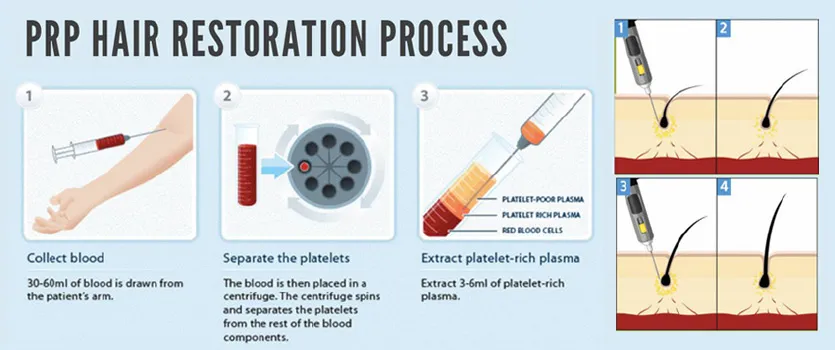
PRP in six simple steps
- 1Hair assessment
- 2Blood sample
- 3Separation
- 4Numbing
- 5Injection
- 6Follow-up sessions
Same goal. Different preparation.
PRP is different from GFC
PRP (platelet-rich plasma)
Your blood is spun to concentrate platelets. The plasma containing these platelets is injected into the scalp.
- Prepared from your own blood
- Contains concentrated platelets
- Most studied of the two
GFC (growth factor concentrate)
Your blood is processed with a special kit to release and collect growth factors from the platelets.
- Also prepared from your own blood
- Different preparation method
- Evidence is still early
The treatment depends on the person
When may PRP be considered?
PRP may be suggested by your doctor for:
Male pattern hair loss — in its early or moderate stage — a receding hairline or thinning crown
Female pattern hair loss — a widening parting or overall thinning on top
Thinning hair — where hair roots are still active
Support with medicines — alongside minoxidil or other prescribed treatment
Before or after a hair transplant — to support existing native hair
When PRP may not be suitable
- Fully bald areas where hair roots are no longer active
- Low platelet count or a bleeding disorder
- Blood-thinning medicines that cannot be safely paused
- Active scalp infection or skin disease in the treatment area
- Some ongoing illnesses, cancer treatment or pregnancy — your doctor will advise
Assessment comes first
PRP should be suggested after a diagnosis, not as a standard package.
Book an assessmentA simple, in-clinic process
What happens during a PRP session?
- 01
Scalp check and marking
The scalp is cleaned and the thinning areas are marked.
- 02
Blood collection
A small blood sample is taken from your arm.
- 03
PRP preparation
The blood is processed in a centrifuge to concentrate the platelets.
- 04
Numbing
A numbing cream is applied to the treatment area.
- 05
PRP injection
Small amounts of PRP are injected across the thinning areas with a fine needle.
The session includes the time needed to prepare the PRP. You can go home the same day and return to most normal work.
Is PRP hair treatment painful?
A numbing cream is used, so most people feel only mild pricking or pressure during the injections. The scalp may feel tender or tight for a day. The level of discomfort differs from person to person.
PRP is a course, not a one-time treatment
How many PRP sessions will you need?
PRP is usually planned as a course of sessions a few weeks apart, followed by maintenance sessions. Your exact plan — how many sessions, how far apart and how often to maintain — is made at consultation.
The number of sessions depends on
- 01
Cause of hair loss
Hereditary hair loss usually needs ongoing care.
- 02
Stage of hair loss
Early thinning may need fewer sessions.
- 03
Area treated
Hairline, crown or the whole top of the scalp.
- 04
How your hair responds
Progress is reviewed before each session.
- 05
Other treatment
Whether you are also using medicines.
- 06
Your goals
Reducing hair fall versus improving thickness.
Hair grows slowly
What happens after PRP?
After a session, you may notice:
- Mild scalp tenderness
- Redness
- Slight swelling
- Pinpoint bleeding
- Bruising at the blood-draw site
- Mild headache
These usually settle within a day or two.
PRP results timeline
- 01
Day of treatment
Mild tenderness or redness; avoid washing your hair for the time advised.
- 02
First few days
The scalp settles; your normal routine continues.
- 03
Weeks 4–8
Next sessions continue as planned. Hair fall may start to reduce.
- 04
Months 3–6
Some people notice thicker hair and fewer hairs falling.
- 05
Months 6–12
Progress is compared with your first photos, and maintenance is planned.
The exact timeline varies between individuals.
Aftercare tips
- Avoid washing your hair for the time your doctor advises
- Avoid hair oil, hair colour and chemical treatments for a few days, as advised
- Avoid heavy exercise, steam and swimming for the time advised
- Continue prescribed medicines unless your doctor says otherwise
- Call the clinic if you notice spreading redness, pus or fever
Safety first
Is PRP hair treatment safe? Side effects to know
PRP is generally well tolerated because it is made from your own blood. Like any injection treatment, it can still have side effects.
- Scalp tenderness, redness or swelling for a day or two
- Mild headache after the session
- Pinpoint bleeding or bruising at injection sites
- Bruising where blood was drawn
- Rarely, infection at injection sites
- Rarely, a temporary increase in hair shedding
Seek prompt medical advice if you develop spreading redness, pus, fever or severe pain after treatment.
Results depend on more than the injection
What affects your PRP results?
The right diagnosis
PRP is most often used for pattern hair loss. It is less useful for other causes.
Stage of hair loss
PRP works best on thinning areas, not fully bald areas.
Preparation quality
How the PRP is prepared affects what goes into your scalp.
Completing the course
Stopping after one or two sessions often gives limited change.
Combining treatments
PRP is often used with medicines like minoxidil for better support.
What does the research say?
Studies show PRP can improve hair density in many people with pattern hair loss compared with no treatment. Results vary widely between people, and the quality of evidence is still low to moderate. Studies also suggest PRP may work better when combined with minoxidil than when either is used alone. The Indian Association of Dermatologists (IADVL) has published recommendations on how PRP should be prepared and used for pattern hair loss.
In simple words
PRP can help some people, but not everyone, and it is not a cure for hereditary hair loss.
The same treatment, different plans
PRP for different types of hair loss
Male pattern hair loss
A receding hairline at the temples or thinning at the crown. PRP is often combined with prescribed medicines.
Male pattern baldness treatmentFemale hair thinning
A widening parting or thinning on top. Hormones, iron and thyroid are checked before planning PRP.
Female hair loss treatmentAlong with a hair transplant
PRP may be used to support existing hair around a transplant. It does not replace a transplant where hair is fully lost.
Hair transplantPatchy hair loss
In selected cases of alopecia areata, PRP may be considered by your doctor. Other treatments usually come first.
Alopecia areata treatmentWhat to expect to pay
PRP hair treatment cost in Ahmedabad
The cost of PRP depends on the number of sessions, the area treated, the preparation method and whether you also need medicines or tests. Your doctor will explain the per-session and full course cost at consultation.
When comparing clinics, ask for the total cost of the course, not just one session, and what is included.
Your doctor explains the full course cost at consultation — before you start.
Understand the treatment before you choose it
PRP hair treatment in Ahmedabad, Gujarat
Many people in Ahmedabad and Gandhinagar search for PRP after trying oils, shampoos and supplements without much change. PRP can be a useful option for the right person, but it is not a quick fix and it does not suit every type of hair loss. At ADORN, PRP is planned by Dr Harsh Amin after a full assessment. You will know the likely cause of your hair fall, whether PRP is suitable, how many sessions you may need and what result is realistic — before you begin.
“PRP is a support treatment for living hair roots. It works best as part of a plan, not on its own.”
PRP FAQ
Frequently asked questions
Your consultation will cover anything not answered here.
Is PRP effective for hair fall?
Studies show PRP can improve hair thickness and reduce hair fall in many people with pattern hair loss. Results vary, and it does not work for everyone.
How many PRP sessions are needed for hair?
PRP is usually given as a course of sessions a few weeks apart, followed by maintenance. Your doctor will plan the number based on your hair loss.
Is PRP hair treatment painful?
A numbing cream is used, so most people feel only mild pricking or pressure. The scalp may feel tender for a day.
When will I see results after PRP?
Some people notice less hair fall within the first few sessions. Visible change in thickness usually takes 3–6 months.
Is PRP permanent?
No. PRP does not stop hereditary hair loss permanently. Maintenance sessions are usually needed to keep the improvement.
Can PRP regrow hair on a bald area?
No. PRP supports hair roots that are still alive. It cannot grow hair where roots are permanently lost.
Can I take PRP every week?
PRP is not usually given every week. Sessions are spaced a few weeks apart to give the scalp time to respond.
Is PRP better than minoxidil?
They work differently. Minoxidil has stronger evidence for pattern hair loss. PRP is often used along with minoxidil rather than instead of it.
Is PRP safe for women?
Yes, PRP can be used for female hair thinning. Hormones, iron and thyroid should be checked first. Tell your doctor if you are pregnant or breastfeeding.
Can I go to work after PRP?
Yes. Most people return to normal work the same day.
Can PRP be done after a hair transplant?
Yes, in some cases. PRP may be used to support existing hair around the transplanted area.
What is the difference between PRP and GFC?
Both are made from your own blood. PRP concentrates platelets; GFC uses a different method to collect growth factors. Your doctor will advise which suits you.
Is PRP right for your hair?
Find out what will help before you start
Find out the cause of your hair fall, whether PRP suits you and what result is realistic — before you start any treatment.

Consult Dr Harsh Amin
Board-certified plastic surgeon · 18+ years of experience
- Mon–Sat · 8 am – 8 pm
- +91 70 4800 4800
Continue exploring
Medical information on this page is for general educational purposes and is not a substitute for an individual medical consultation. Suitability, risks, number of sessions and results vary. Consult a qualified medical professional before making a treatment decision. Medically reviewed by Dr Harsh Bharat Amin, MCh (Plastic Surgery). Last reviewed: 13 October 2026.