






Dr Harsh Bharat Amin
Board-certified plastic surgeon · 18+ years of experience
Sudden hair fall at ADORN is assessed by Dr Harsh Amin, a board-certified plastic surgeon with 18+ years of experience — starting with what happened months earlier.
Sudden hair fall is frightening, but it is often your body recovering from something else. Finding that ‘something’ is the key to stopping it.
Understanding the basics
What is sudden hair fall (telogen effluvium)?
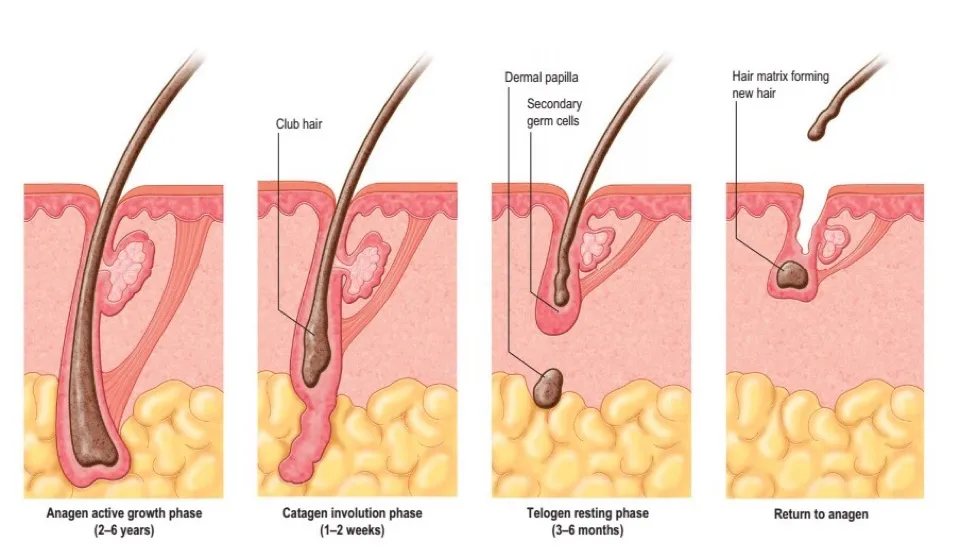
Each hair on your head goes through a cycle: a long growth phase, a short transition and a resting phase that ends in shedding. Normally, only a small number of hairs are resting at any time.
When your body goes through a shock — high fever, childbirth, surgery, severe stress or a sudden diet — many growing hairs switch to the resting phase together. About 2 to 3 months later, they all fall out around the same time. This is called telogen effluvium.
The hair roots are not damaged. New hair is already growing underneath, pushing the old hair out. That is why this type of hair fall is usually temporary.
How sudden hair fall is treated, in six steps
- 1History
- 2Scalp examination
- 3Tests if needed
- 4Diagnosis
- 5Treatment plan
- 6Review
Why it happens
Common causes of sudden hair fall
| Trigger | When hair fall usually starts |
|---|---|
| High fever (dengue, typhoid, malaria, viral fever) | 1–3 months after the fever |
| COVID-19 | 1–3 months after the illness |
| Childbirth | 2–4 months after delivery |
| Surgery or hospital stay | 2–3 months after |
| Crash dieting or fast weight loss | 2–3 months after the diet starts |
| Severe emotional stress | 2–3 months after the event |
| Low iron, vitamin D or B12 | Gradual, can continue until corrected |
| Thyroid problems | Can start any time; continues until treated |
| Starting or stopping some medicines, including birth-control pills | Weeks to months after the change |
| Major illness or long-term health conditions | Varies |
The delay is why many people do not connect their hair fall to the cause — the trigger happened months earlier.
Common in India
Hair fall after dengue, typhoid and fever
High fevers are one of the most common triggers we see in Ahmedabad, especially after the monsoon season. Hair fall after dengue is common but often not talked about. It usually starts 1 to 3 months after the fever and, in most people, settles on its own within a few months.
If hair fall continues for more than 6 months after a fever, or your hair looks thinner overall, other causes such as low iron or hereditary thinning should be checked.
Two different patterns
Short-term vs long-lasting hair fall
Short-term (acute) telogen effluvium
Heavy shedding that starts 2–3 months after a trigger and settles within about 6 months.
- Clear trigger is often found
- Hair usually grows back on its own
- Treatment focuses on the cause
Long-lasting (chronic) telogen effluvium
Shedding that goes on for more than 6 months, sometimes on and off for years.
- Trigger may be hidden or ongoing
- Deficiencies, thyroid or hidden pattern loss need checking
- May need longer treatment
The plan depends on the cause
Sudden hair fall treatment options at ADORN
- 01
Finding and treating the trigger
Recovering fully from illness, treating thyroid problems, reviewing medicines with your doctor and avoiding crash diets. This is the most important step.
- 02
Correcting deficiencies
If blood tests show low iron (ferritin), vitamin D, B12 or protein, these are corrected under supervision. Supplements help mainly when a deficiency is found.
- 03
Supporting regrowth
In some cases, minoxidil may be suggested to support regrowth, especially if shedding is long-lasting or there is underlying thinning.
Hair loss medicines guide - 04
Treating the scalp
Dandruff or scalp inflammation is treated so it does not add to hair fall.
Dandruff & scalp treatment - 05
In-clinic treatment if needed
If sudden hair fall uncovers hereditary thinning, PRP, GFC or other treatments may be discussed.
PRP hair treatment - 06
Gentle hair care and reassurance
Gentle washing and combing, avoiding tight hairstyles and harsh chemical treatments, and understanding that the shedding is usually temporary.
When to get help
When should you see a doctor for sudden hair fall?
See a doctor if:
- Hair fall has lasted more than 3 months
- Your hair looks thinner overall or your parting is wider
- You have bald patches
- You also feel tired, cold, have weight changes or irregular periods
- Hair fall started after a new medicine
- Your scalp is itchy, red, painful or scaly
- You are very worried about your hair fall
Assessment comes first
Most sudden hair fall settles, but the cause should be checked.
Book an assessmentWhat to expect
What happens at your consultation?
- 01
History
Illness, fever, delivery, surgery, stress, diet and medicines in the last 6 months.
- 02
Scalp examination
A gentle hair pull test and a check for patterns or patches.
- 03
Blood tests
Often iron, ferritin, thyroid, vitamin D and B12, depending on your history.
- 04
Diagnosis and plan
What is causing the hair fall and what will help.
- 05
Follow-up
Shedding and regrowth are reviewed over the next few months.
You leave knowing why your hair is falling and whether you need treatment or just time.
How much hair fall is normal?
Losing around 50 to 100 hairs a day can be normal. In telogen effluvium, people often lose many more — sometimes a few hundred a day. Long hair can make normal shedding look more than it is.
Hair grows slowly
How long does sudden hair fall last?
What to expect over time
- 01
Trigger
Fever, delivery, surgery, stress or diet.
- 02
2–3 months later
Sudden heavy shedding starts.
- 03
Months 3–6
Shedding is often at its worst, then starts to slow once the trigger is gone.
- 04
Months 4–9
Short new hairs appear, especially along the hairline.
- 05
6–12 months
Hair thickness usually returns close to normal.
The exact timeline varies between individuals.
Hair grows about 1 cm a month, so it takes time for new hair to add visible thickness. If shedding continues beyond 6 months, it should be checked again.
Aftercare tips
- Comb and wash hair gently; it is fine to wash regularly
- Avoid tight ponytails, buns and braids
- Avoid harsh chemical treatments, rebonding and heavy heat styling for now
- Eat regular meals with enough protein
- Do not start strong medicines or high-dose supplements without advice
Safety first
Is treatment safe?
Most treatment for sudden hair fall is about finding and correcting the cause, so side effects are usually mild. Your doctor will explain any risks of the treatment chosen.
- Iron and vitamin supplements — stomach upset or constipation; harm if taken in excess without a deficiency
- Minoxidil — scalp itching, early shedding, unwanted facial hair
- In-clinic treatments, if used — scalp tenderness, redness or small bruises for a day or two
Results depend on more than the treatment
What affects recovery?
Removing the trigger
Hair recovers best once the cause is gone.
Correcting deficiencies
Low iron or thyroid problems slow recovery.
Time
Hair needs months to grow back.
Hidden pattern hair loss
If present, it needs its own treatment.
Avoiding new shocks
Repeated crash diets or illness can restart shedding.
In simple words
Most sudden hair fall is temporary and recovers within 6 to 12 months. The doctor's job is to find the trigger, rule out other causes and help recovery along.
Different triggers, different plans
Sudden hair fall in different situations
After fever, dengue or typhoid
Usually settles on its own once you recover fully.
After delivery
Heavy shedding 2–4 months after childbirth is common and usually settles.
Female hair loss treatmentAfter weight loss or crash dieting
Too little protein or calories can trigger shedding.
With low iron or thyroid
Hair fall continues until the deficiency or thyroid problem is treated.
What to expect to pay
Sudden hair fall treatment cost in Ahmedabad
Most sudden hair fall is managed with a consultation, blood tests and correcting the cause. In-clinic treatment is needed only in some cases.
Your doctor will explain the expected cost after assessment.
Your doctor explains the full course cost at consultation — before you start.
Understand your hair fall before you treat it
Sudden hair fall treatment in Ahmedabad, Gujarat
After dengue, typhoid and viral fever seasons, many people in Ahmedabad and Gandhinagar suddenly notice heavy hair fall and panic — often buying expensive oils, shampoos and supplements. In most cases, the hair fall is the body recovering from an illness months earlier. At ADORN, Dr Harsh Amin finds the trigger, checks for deficiencies and thyroid problems, and makes sure there is no hidden pattern hair loss. You will know why your hair is falling, how long it is likely to last and whether you need treatment or just time.
“Sudden hair fall is usually a sign of something that already happened. Find the cause, and the hair usually follows.”
Sudden hair fall FAQ
Frequently asked questions
Your consultation will cover anything not answered here.
Why is my hair suddenly falling so much?
The most common reason is telogen effluvium — shedding 2 to 3 months after a shock to the body, such as fever, childbirth, surgery, stress or a crash diet. Low iron and thyroid problems are also common causes.
Is sudden hair fall permanent?
Usually not. In most people, hair grows back within 6 to 12 months once the trigger is removed. If it lasts longer, other causes should be checked.
How long does hair fall last after dengue?
It usually starts 1 to 3 months after the fever and settles within a few months. See a doctor if it continues beyond 6 months.
Can typhoid or COVID cause hair fall?
Yes. Any high fever or serious illness can trigger sudden hair fall a few weeks to months later.
Can stress cause sudden hair fall?
Yes. Severe stress can push many hairs into the shedding phase, causing hair fall 2 to 3 months later.
Why is my hair falling after delivery?
Hormone changes after childbirth often cause heavy shedding 2 to 4 months after delivery. It usually settles within months.
Can crash dieting cause hair fall?
Yes. Too little protein or calories, or very fast weight loss, can trigger sudden hair fall.
Which blood tests are needed for sudden hair fall?
Often a blood count, ferritin (iron stores), thyroid tests, vitamin D and B12. Your doctor will choose based on your history.
Will I go bald from sudden hair fall?
Telogen effluvium does not usually cause baldness. If your hair looks thinner in one area, or you see bald patches, see a doctor to check for other causes.
Should I stop washing my hair to reduce hair fall?
No. Washing does not cause hair fall; it only removes hairs that were already loose. Wash gently and regularly.
Do biotin and hair vitamins help sudden hair fall?
They help mainly if you have a deficiency. Without one, they rarely make a difference.
When should I see a doctor?
If hair fall lasts more than 3 months, your hair looks thinner, you see bald patches, or you have other symptoms like tiredness or weight changes.
Find out why your hair is suddenly falling
Find the cause before you spend on products
Get the cause checked, the right tests done and a clear plan for recovery — before you spend on products that may not help.

Consult Dr Harsh Amin
Board-certified plastic surgeon · 18+ years of experience
- Mon–Sat · 8 am – 8 pm
- +91 70 4800 4800
Continue exploring
Medical information on this page is for general educational purposes and is not a substitute for an individual medical consultation. Do not start, stop or change any medicine or supplement without advice from your doctor. Recovery time and results vary. Medically reviewed by Dr Harsh Bharat Amin, MCh (Plastic Surgery). Last reviewed: 13 October 2026.