




Dr Harsh Bharat Amin
Board-certified plastic surgeon · 18+ years of experience
Male pattern baldness at ADORN is assessed by Dr Harsh Amin, a board-certified plastic surgeon with 18+ years of experience — with treatment matched to your stage.
The hair you protect today is hair you will not need to replace later. Early treatment is the most valuable thing a young man with thinning hair can do.
Understanding the basics
What is male pattern baldness?
Male pattern baldness, also called androgenetic alopecia, is hereditary hair loss. It happens when hair roots in certain areas are sensitive to DHT, a hormone made from testosterone. Over time, DHT makes these hair roots shrink. Each new hair grows thinner and shorter, until the root may stop producing visible hair.
It usually starts at the temples, the crown or both, and follows a pattern. Hair at the back and sides of the head is usually not affected, which is why it is used for hair transplants.
It is not caused by wearing caps, using hair gel, or washing hair too often. It often runs in families — from either the mother's or the father's side.
How male pattern baldness is treated without surgery, in six steps
- 1Assessment
- 2Ruling out other causes
- 3Staging
- 4Treatment plan
- 5Baseline photos
- 6Regular review
Know your stage
The stages of male pattern baldness
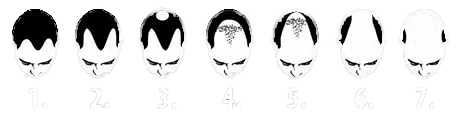
Doctors use the Norwood scale to describe how far male pattern baldness has progressed. Your stage helps decide which treatment is likely to help.
| Stage | What you may notice | Non-surgical treatment outlook |
|---|---|---|
| 1 | No noticeable hair loss | Monitoring if there is family history |
| 2 | Slight recession at the temples | Good — early treatment can protect hair |
| 3 | Deeper recession at the temples, or thinning at the crown (3 vertex) | Good — medicines with or without PRP/GFC |
| 4 | Clear recession in front and thinning at the crown | Fair — slows loss, thickens thinning areas |
| 5 | Front and crown thinning getting closer | Limited in bald areas — protects remaining hair |
| 6 | Front and crown areas joined | Mainly protects remaining hair; transplant may be considered |
| 7 | Hair only at the back and sides | Non-surgical treatment cannot regrow lost areas |
Where are you on the scale? A doctor can confirm your stage at consultation.
Book an assessmentSpot it early
Early signs of male pattern baldness
Sudden heavy shedding all over the head, or round bald patches, usually has a different cause and needs a different approach.
Temples moving backAn “M” shape forming at the hairline
Thinning at the crownA spot at the back of the head visible in photos
Finer, weaker hairHair becoming thinner and shorter in some areas
More scalp showingUnder bright light or when hair is wet
Slow, steady changeOver months or years, not suddenly
Family historyFather, grandfather, uncles or brothers with hair loss
Two ways to treat male pattern baldness
Non-surgical treatment is different from a hair transplant
Non-surgical treatment
Medicines and in-clinic treatments that slow hair loss and thicken thinning hair.
- Works on hair roots that are still alive
- Slows further loss
- Usually needs ongoing use
Hair transplant
Surgery that moves your own hair roots from the back of the head to bald areas.
- Restores permanently bald areas
- Does not stop future loss of native hair
- Often combined with medicines
Many men need treatment first, and some later choose a transplant as well.
The treatment depends on your stage
Male pattern baldness treatment options at ADORN
- 01
Minoxidil (lotion, foam or low-dose tablets)
Helps hair stay in the growth phase longer and supports thicker hair. Usually the starting point for most men. Low-dose tablets may be considered for some under supervision.
- 02
Finasteride or dutasteride (tablets)
Lower DHT, the hormone that shrinks hair roots. Their main benefit is slowing further hair loss, and some men also see thicker hair. Prescribed after a discussion of benefits and possible side effects.
- 03
PRP hair treatment
Platelet-rich plasma from your own blood, injected into thinning areas. Often added to medicines.
Learn about PRP - 04
- 05
Mesotherapy or QR678
Micro-injections of vitamins, peptides or ready-made formulations, with no blood draw.
Learn about mesotherapy - 06
Scalp and supportive care
Treating dandruff or scalp inflammation, and correcting any deficiencies found on tests.
The plan depends on the person
Who can be treated without surgery?
Non-surgical treatment usually suits men who have:
Early or moderate hair loss — norwood stages 2 to 4
Thinning rather than fully bald areas
Young age with fast progression — to slow loss before deciding on surgery
Had a transplant — to protect native hair around transplanted areas
Not ready for surgery — or prefer to avoid it
When non-surgical treatment may not be enough
- Large areas where hair roots are no longer active (advanced stages)
- Expectation of a fully restored hairline without surgery
- Hair loss caused by another condition that needs separate treatment
Assessment comes first
Your stage and goals decide the plan, not a standard package.
Book an assessmentStarting treatment the right way
What happens at your consultation?
- 01
History
When your hair loss started, how fast it is changing, family history and health.
- 02
Scalp examination
Your Norwood stage, hair thickness and scalp health.
- 03
Tests if needed
To rule out other causes.
- 04
Treatment plan
Medicines and any in-clinic treatment, with sessions and costs explained.
- 05
Baseline photos
Standard photos to compare progress later.
You leave knowing your stage, the likely course of your hair loss and your options.
Does treatment hurt?
Medicines are used at home. For PRP, GFC or mesotherapy, a numbing cream is used, so most men feel only mild pricking. The scalp may feel tender for a day.
Hair grows slowly
How long does treatment take to work?
What to expect over time
- 01
Weeks 2–8
Some men notice extra shedding when starting minoxidil. This is often temporary.
- 02
Months 2–3
Daily hair fall may start to reduce.
- 03
Months 3–6
Thinning areas may look thicker; hair loss slows.
- 04
Months 6–12
Progress is compared with your first photos.
- 05
After 12 months
Treatment usually continues to keep the benefit.
The exact timeline varies between individuals.
Results are gradual and differ from person to person.
What happens if you stop treatment?
Male pattern baldness continues once treatment stops. Hair gained or protected on treatment is usually lost over the following months. That is why it is managed long term, much like other ongoing conditions.
Safety first
Possible side effects of treatment
Side effects depend on the treatment chosen. Your doctor will explain the risks of your chosen treatment and what to watch for.
- Minoxidil lotion — scalp itching, early shedding, unwanted hair on the forehead
- Low-dose minoxidil tablets — facial or body hair, ankle swelling, dizziness, fast heartbeat
- Finasteride or dutasteride — reduced sex drive, erection or ejaculation problems in a small number of men; breast tenderness; mood changes have been reported
- PRP, GFC, mesotherapy — scalp tenderness, redness, small bruises for a day or two
Seek prompt medical advice if you notice chest pain, fainting, a very fast heartbeat, sudden swelling, mood changes or any unexpected symptom.
Results depend on more than the medicine
What affects your results?
Your stage
Earlier stages respond better than advanced baldness.
Starting early
Treatment protects hair that is still alive; it cannot bring back roots already lost.
Using treatment regularly
Missing doses or stopping early reduces benefit.
Combining treatments
Medicines with PRP or GFC are often used together.
Lifestyle factors
Smoking, crash dieting, poor sleep and some gym supplements may affect hair.
What does the research say?
Minoxidil and finasteride have the strongest and longest research for male pattern baldness. PRP has shown benefit as an add-on in many studies, especially with minoxidil, though results vary. Indian expert guidelines recommend a proper diagnosis and medical treatment as the base of management.
In simple words
Male pattern baldness cannot be cured, but in early and moderate stages it can usually be slowed and improved with regular treatment.
The same condition, different plans
Treatment for different patterns of male hair loss
Receding hairline
Recession at the temples. Medicines are the base; in-clinic treatment may be added.
Crown thinning
Thinning at the back of the head. Often responds better to non-surgical treatment than the hairline.
Hair loss in your 20s
Early, fast-progressing loss. Starting treatment early protects the most hair.
After a hair transplant
Treatment protects native hair around the transplanted area.
Hair transplantSurgery is one option
When does a hair transplant become an option?
Non-surgical treatment cannot regrow hair where roots are permanently lost. If you have bald areas at the front or crown and enough donor hair at the back, a hair transplant may be considered — usually alongside continued treatment to protect your remaining hair.
What to expect to pay
Male pattern baldness treatment cost in Ahmedabad
The cost depends on your stage and the treatment chosen. Medicines are a monthly cost; PRP, GFC and mesotherapy are courses of sessions plus maintenance.
Your doctor will explain the full cost of your plan after assessment.
Your doctor explains the full course cost at consultation — before you start.
Understand your hair loss before you treat it
Male pattern baldness treatment in Ahmedabad, Gujarat
Many young men in Ahmedabad and Gandhinagar notice their hairline changing in their 20s and try oils, shampoos and supplements for years. By the time they see a doctor, more hair roots may already be lost. At ADORN, Dr Harsh Amin assesses your stage, explains how your hair loss is likely to progress and plans treatment to protect as much hair as possible. If non-surgical treatment is unlikely to give you the result you want, we will tell you — and explain the options.
“Male pattern baldness is a slow process. The earlier you act, the more hair you keep.”
Male pattern baldness FAQ
Frequently asked questions
Your consultation will cover anything not answered here.
Can male pattern baldness be treated without surgery?
Yes, in early and moderate stages. Medicines, often with PRP or GFC, can slow hair loss and thicken thinning hair. They cannot regrow hair where roots are permanently lost.
Can male pattern baldness be stopped completely?
It cannot be cured, but it can usually be slowed a lot with regular treatment. Treatment needs to continue to keep the benefit.
What is the best age to start treatment?
As early as you notice signs. Treatment protects hair roots that are still alive, so starting early keeps more hair.
Can a receding hairline grow back?
In early stages, some thickening is possible with treatment. Areas that have been bald for a long time usually do not grow back without a transplant.
Does finasteride have side effects?
A small number of men have sexual side effects or mood changes. Your doctor will explain the risks and check on you during treatment.
Does minoxidil work for male pattern baldness?
Minoxidil is one of the most studied treatments. Many men see less hair loss and some regrowth, especially at the crown, after 3–6 months of regular use.
Is PRP useful for male pattern baldness?
PRP can help some men as an add-on to medicines. It works on thinning areas where hair roots are still active.
Does wearing a cap or helmet cause baldness?
No. Normal caps and helmets do not cause male pattern baldness.
Can gym supplements cause hair loss?
Some supplements and anabolic steroids can speed up hair loss in men who are prone to it. Tell your doctor what you take.
What happens if I stop treatment?
Hair loss usually continues, and hair gained on treatment is often lost over the following months.
Is baldness passed from the mother's side?
It can come from either side of the family. Having relatives with hair loss on either side increases the chance.
When should I consider a hair transplant?
When you have bald areas that medicines cannot regrow, your hair loss is stable and you have enough donor hair. Many men combine a transplant with ongoing treatment.
Find out your stage and your options
Protect your hair before it progresses further
Get a proper diagnosis, know your Norwood stage and get a plan to protect your hair — before it progresses further.

Consult Dr Harsh Amin
Board-certified plastic surgeon · 18+ years of experience
- Mon–Sat · 8 am – 8 pm
- +91 70 4800 4800
Continue exploring
Medical information on this page is for general educational purposes and is not a substitute for an individual medical consultation. Do not start, stop or change any medicine without advice from your doctor. Suitability, side effects and results vary. Medically reviewed by Dr Harsh Bharat Amin, MCh (Plastic Surgery). Last reviewed: 13 October 2026.